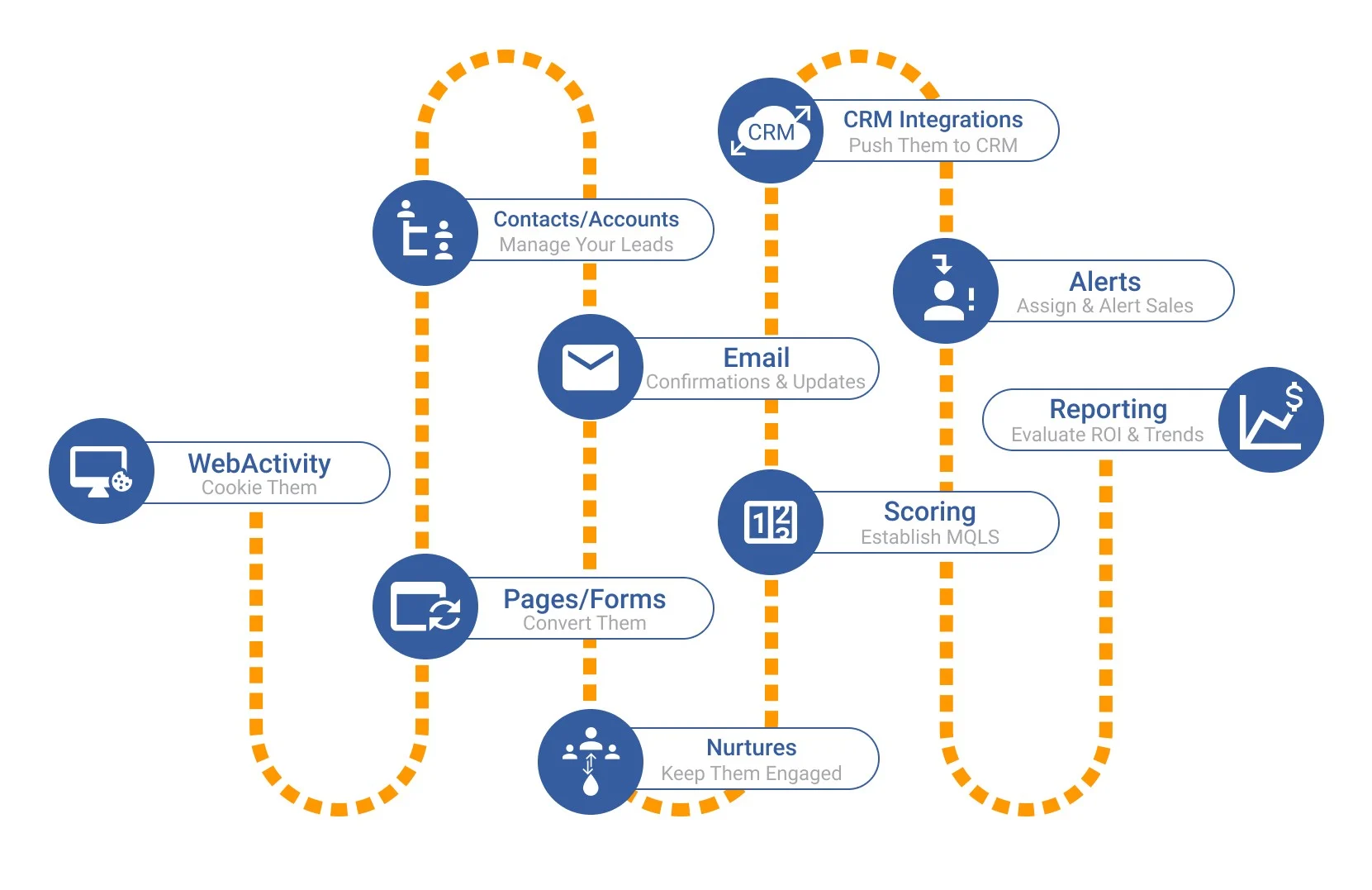
In today’s competitive marketplace, businesses strive to deliver personalized customer experiences while optimizing operational efficiency. One of the most powerful ways to achieve this is by integrating CRM (Customer Relationship Management) with marketing automation. This synergy enables organizations to streamline customer interactions, automate marketing campaigns, and ultimately drive higher revenue.
This article explores the advantages of using a CRM with marketing automation, key features, and how this integration transforms customer engagement and business growth in 2025.
What Is CRM with Marketing Automation?
A CRM system centralizes customer data, tracks interactions, and manages sales pipelines. Marketing automation, on the other hand, uses software to automate repetitive marketing tasks such as email campaigns, social media posting, and lead nurturing.
When combined, a CRM with marketing automation allows businesses to leverage customer data to launch highly targeted, automated marketing campaigns while seamlessly managing sales and support activities—all from a single platform.
Why Integrate CRM with Marketing Automation?
1. Unified Customer Data for Better Personalization
A combined platform consolidates customer profiles, interaction history, preferences, and behavior data. This unified data enables marketers to create highly personalized campaigns that resonate with individual customers, increasing engagement and conversion rates.
2. Streamlined Lead Management
Marketing automation nurtures leads automatically by sending timely, relevant content, while the CRM tracks lead progress through the sales funnel. This integration reduces manual effort and ensures no prospect falls through the cracks.
3. Enhanced Sales and Marketing Alignment
With shared data and workflows, sales and marketing teams can collaborate more effectively. Marketing insights feed sales strategies, and sales feedback helps refine marketing campaigns, fostering a cohesive approach to customer acquisition and retention.
4. Improved Customer Lifecycle Management
Automated workflows trigger communications based on customer behavior, such as welcome emails, product recommendations, or re-engagement messages. This continuous interaction strengthens customer loyalty and lifetime value.
Key Features of CRM with Marketing Automation
To maximize the benefits of integrating CRM with marketing automation, look for these essential features:
a) Contact & Lead Management
- Centralized database of leads and customers
- Lead scoring based on engagement and demographics
- Segmentation for targeted campaigns
b) Automated Email Marketing
- Drip campaigns triggered by actions or time intervals
- Personalized email content using dynamic fields
- A/B testing to optimize subject lines and messaging
c) Multi-Channel Campaigns
- Automated outreach via email, SMS, social media, and more
- Behavioral tracking across channels to inform future interactions
d) Sales Pipeline & Deal Tracking
- Visual pipelines showing deal stages
- Automated task assignments and reminders for sales reps
e) Analytics and Reporting
- Campaign performance metrics (open rates, click-through rates)
- Lead source tracking and ROI analysis
- Sales forecasting based on marketing data
Benefits of Using CRM with Marketing Automation
Increased Efficiency
By automating repetitive tasks such as sending emails and updating contact records, your team saves time and reduces human error.
Higher Conversion Rates
Targeted, behavior-based campaigns deliver the right message at the right time, boosting lead-to-customer conversion.
Better Customer Experience
Consistent, personalized communication enhances customer satisfaction and builds trust.
Scalable Growth
As your business expands, automation handles increasing volumes of leads and customers without additional manual effort.
Choosing the Right CRM with Marketing Automation Solution
When selecting a platform, consider the following factors:
- Ease of Use: Intuitive interface for both sales and marketing teams.
- Integration Capabilities: Ability to connect with other tools such as e-commerce platforms, social media, and analytics software.
- Customization: Flexibility to tailor workflows, campaigns, and reporting.
- Scalability: Support for growing contact lists and advanced automation.
- Customer Support and Training: Access to resources that help your team succeed.
Popular CRM with Marketing Automation Platforms in 2025
- HubSpot: Renowned for its robust free CRM combined with powerful marketing automation tools, ideal for SMBs.
- Salesforce Pardot: Enterprise-grade solution offering advanced automation and AI-driven insights.
- Zoho CRM Plus: Affordable all-in-one platform with integrated marketing and sales automation.
- ActiveCampaign: Known for strong email marketing automation paired with CRM features.
- Microsoft Dynamics 365 Marketing: Perfect for businesses invested in Microsoft’s ecosystem seeking seamless integration.
Best Practices for Maximizing CRM with Marketing Automation
- Segment Your Audience: Use detailed customer data to create relevant segments for targeted campaigns.
- Personalize Communications: Leverage CRM data to tailor content, improving engagement.
- Automate Lead Nurturing: Design drip campaigns that guide prospects through the buyer journey.
- Align Sales and Marketing: Foster collaboration through shared data and coordinated strategies.
- Monitor and Optimize: Regularly review campaign performance and refine workflows accordingly.
Conclusion
Integrating CRM with marketing automation empowers businesses to connect with customers more effectively, automate key processes, and deliver personalized experiences at scale. This powerful combination not only enhances marketing ROI but also aligns sales and marketing teams for unified growth strategies.
Investing in a robust CRM with marketing automation solution in 2025 is essential for businesses aiming to stay competitive, drive revenue, and build long-lasting customer relationships.