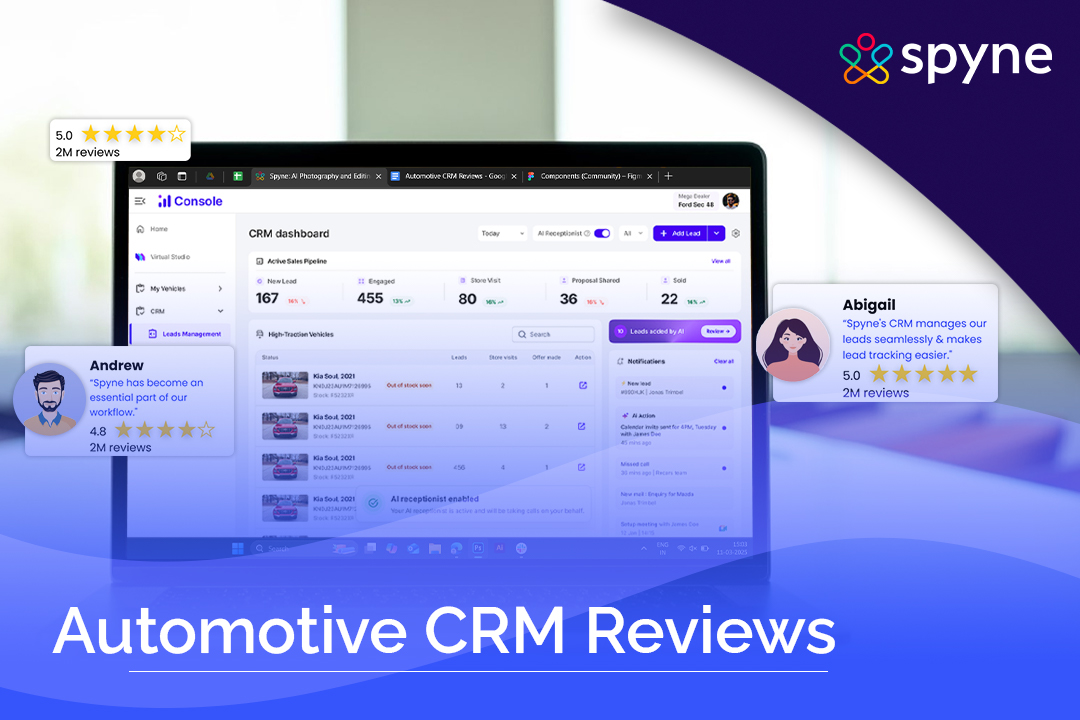
In today’s hyper-competitive business landscape, Customer Relationship Management (CRM) software is not just a luxury—it’s a necessity. Choosing the right CRM system can significantly enhance your sales pipeline, streamline marketing efforts, and elevate customer service. In this article, we provide in-depth CRM software reviews to guide businesses, from startups to enterprises, in selecting the best CRM software for their needs in 2025.
What Is CRM Software and Why It Matters in 2025
CRM software is designed to manage a company’s interactions with current and potential customers. It centralizes customer data, facilitates communication across departments, and improves decision-making through analytics and automation. With the rise of AI and machine learning, modern CRMs now offer predictive insights, advanced segmentation, and real-time engagement tools, making them indispensable for customer-centric businesses.
Top CRM Software Platforms Reviewed in 2025
Below, we break down the top-rated CRM software solutions based on core features, ease of use, pricing, integrations, and user feedback.
1. Salesforce CRM – The Industry Standard
Salesforce remains the global leader in CRM with its extensive suite of tools and enterprise-grade capabilities.
Key Features:
- AI-powered insights via Einstein Analytics
- Custom workflows and automation
- Extensive third-party app ecosystem through AppExchange
- Highly customizable dashboards and reporting
- Scalable for businesses of all sizes
Pros:
- Robust scalability and integrations
- Excellent customer support
- Superior sales and service automation tools
Cons:
- Complex for beginners
- Premium pricing tiers
Ideal for: Enterprises and mid-size businesses seeking deep customization and global scalability.
2. HubSpot CRM – Best Free CRM for Small Businesses
HubSpot CRM offers a powerful free version with essential tools and smooth scalability for growing businesses.
Key Features:
- Unlimited users on the free plan
- Integrated marketing, sales, and customer service tools
- Real-time lead tracking and email templates
- Intuitive UI and powerful automation
Pros:
- Completely free core version
- Seamless integration with HubSpot Marketing
- Simple setup and learning curve
Cons:
- Premium features can be expensive
- Limited customization in free plan
Ideal for: Startups, solopreneurs, and small teams seeking a no-cost CRM to grow into.
3. Zoho CRM – Best Value for Money
Zoho CRM is a versatile, affordable option with a broad range of features that rival more expensive platforms.
Key Features:
- AI-powered sales assistant (Zia)
- Multichannel communication (email, phone, social media)
- Workflow automation and predictive analytics
- Integration with Zoho ecosystem and third-party apps
Pros:
- Competitive pricing
- Highly customizable
- Strong mobile app capabilities
Cons:
- Support can be slow on lower tiers
- Slight learning curve with advanced features
Ideal for: Small to medium-sized businesses looking for robust features on a budget.
4. Pipedrive – Best for Sales-Focused Teams
Pipedrive is a sales-first CRM known for its simplicity, visual pipelines, and strong focus on deal management.
Key Features:
- Visual sales pipelines
- Goal tracking and performance metrics
- Email integration with tracking
- Automation for repetitive tasks
Pros:
- User-friendly interface
- Streamlined sales process
- Excellent mobile access
Cons:
- Limited marketing features
- Fewer integrations compared to bigger players
Ideal for: Sales teams that prioritize pipeline management and deal tracking.
5. Monday.com CRM – Best for Project-Oriented Teams
Monday Sales CRM, built on the Monday.com work OS, combines project management and CRM features into one cohesive platform.
Key Features:
- Visual dashboards and drag-and-drop workflows
- Built-in automation and email tracking
- Seamless collaboration tools
- Customizable CRM templates
Pros:
- Easy to set up and use
- Integrates with popular tools like Slack, Gmail, and Zoom
- Flexible and adaptable for various industries
Cons:
- CRM features still maturing
- Not ideal for enterprise-grade sales operations
Ideal for: Teams that want CRM functionality embedded in their project workflows.
6. Freshsales by Freshworks – Best AI-Powered CRM for SMBs
Freshsales combines AI, automation, and a clean interface into a compelling offering for small and mid-sized businesses.
Key Features:
- AI-based lead scoring and forecasting
- Built-in email, chat, and telephony
- Sales sequences and contact lifecycle stages
- Real-time activity timelines
Pros:
- All-in-one communication suite
- Affordable pricing
- AI capabilities available on lower-tier plans
Cons:
- Some advanced features locked behind higher plans
- Fewer third-party integrations
Ideal for: SMBs looking for intelligent sales automation and built-in communication tools.
7. Microsoft Dynamics 365 – Best for Microsoft Ecosystem
Microsoft Dynamics 365 CRM offers deep integration with Microsoft products, making it a favorite among enterprise users.
Key Features:
- Seamless integration with Microsoft 365 and Teams
- Advanced reporting and analytics
- Scalable across departments: sales, service, marketing
- Real-time collaboration capabilities
Pros:
- Enterprise-grade security and compliance
- Strong AI and automation tools
- Extensive customization
Cons:
- Expensive and complex
- Requires Microsoft ecosystem for full benefit
Ideal for: Large enterprises already using Microsoft services extensively.
Key CRM Software Comparison Table – 2025
| CRM Platform | Best For | Price Range | AI Features | Free Plan | Scalability |
|---|---|---|---|---|---|
| Salesforce | Enterprises | $$$ | Yes | No | Excellent |
| HubSpot CRM | Startups & SMBs | Free – $$$ | Yes | Yes | Very Good |
| Zoho CRM | Budget-Conscious Businesses | $ – $$ | Yes | Yes | Very Good |
| Pipedrive | Sales-Driven Teams | $ – $$ | Limited | No | Good |
| Monday.com CRM | Project-Based Teams | $$ | No | No | Moderate |
| Freshsales | AI-Powered SMB CRM | $ – $$ | Yes | Yes | Good |
| Microsoft Dynamics 365 | Microsoft-Centric Enterprises | $$$ | Yes | No | Excellent |
How to Choose the Right CRM for Your Business
When evaluating CRM software in 2025, consider the following:
- Business Size & Budget: Match the platform’s pricing and scalability to your needs.
- Feature Requirements: Ensure the CRM covers your core needs—sales, marketing, service, or all.
- Ease of Use: A user-friendly interface encourages team adoption.
- Integration Needs: Look for CRMs that work seamlessly with your existing tools.
- Customer Support: Reliable support can save time and reduce frustrations.
Final Thoughts on CRM Software in 2025
The best CRM software in 2025 is the one that fits your business model, supports your growth, and enhances your customer relationships. Whether you are a solo entrepreneur or a multinational corporation, there’s a CRM tailored for your needs. Focus on scalability, automation, user experience, and integration to get the most value from your investment.